Biodiversity & Climate
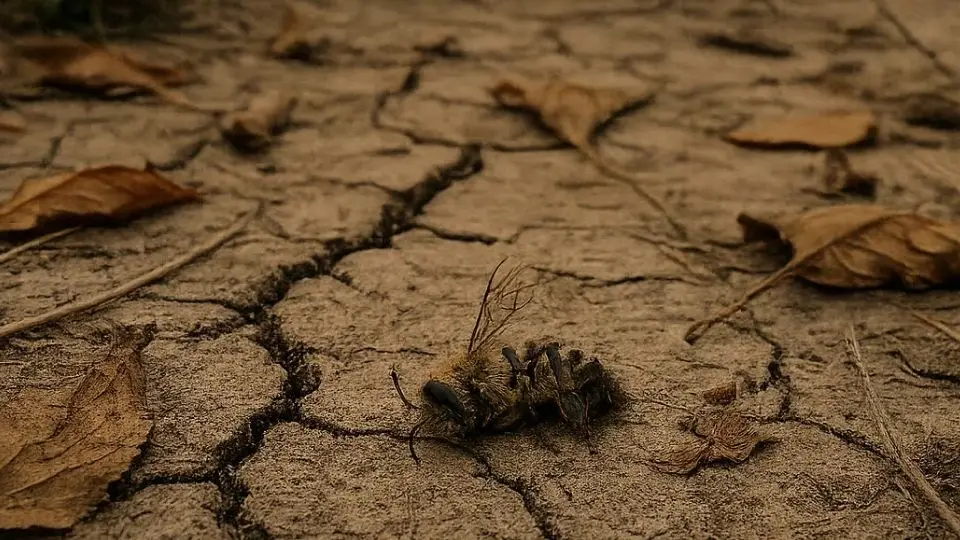
Over one million species are now at risk of extinction, destabilising water cycles, weather systems, and the natural balance that sustains life.
What is the Biodiversity Arc?
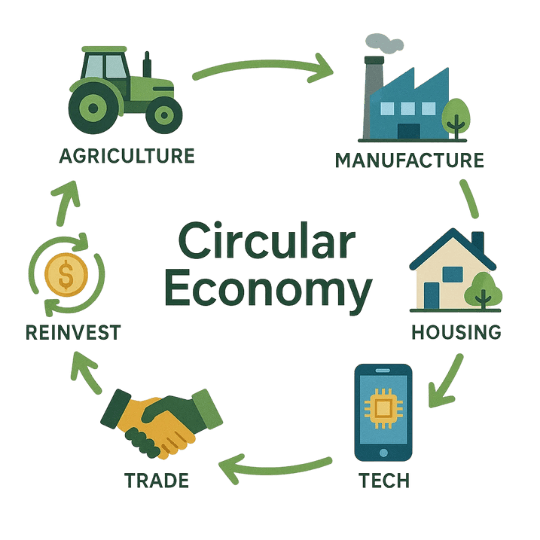
The Biodiversity Arc is a global "how to" initiative that stimulates food, housing, clothing, energy, and ecology by maximizing multi-crop yield productivity into one Whole-System Economy for a resilient humanity.
By supporting the 500 million plus small farmholders, and guaranteeing offtake to Arc collaborative local & global stakeholders, yields produce bio fibers, food, homes, and bio-clean energy. The Arc thereby seeks to rebuild soil health, create local prosperity, reduce migration, grow GDPs, and support the future of all citizens.
The Urgency
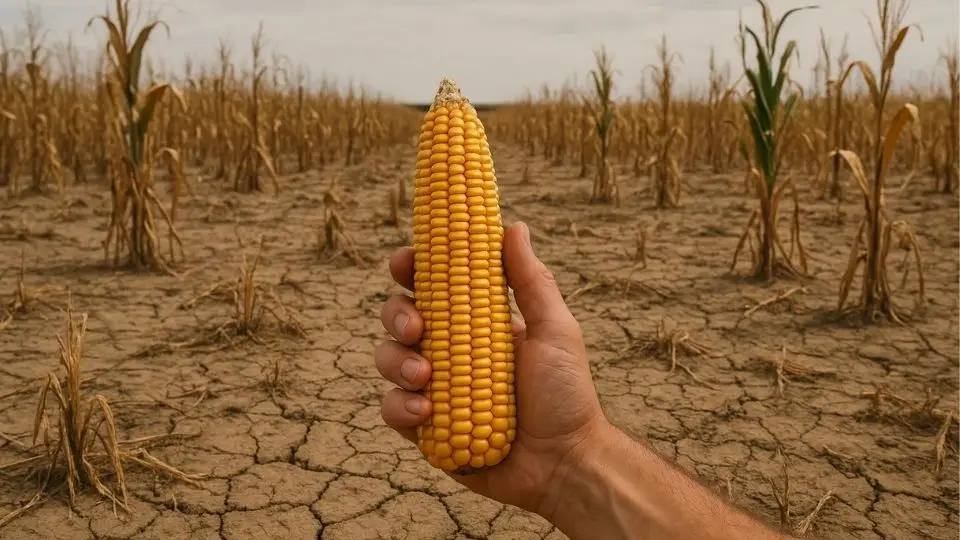
Every day, fertile land turns to dust or sits underutilized — Africa farms only 30% of its arable land. Millions go hungry while 41% of global food is wasted. Families are forced to migrate — not because they want to, but because their soil, water, and livelihoods are disappearing. The extractive global economy has reached its breaking point. If we continue as we are, the cost of inaction will exceed $9 trillion per year by 2030 — just to manage climate refugees and food shortages for over 400 million migrants. That same amount used intelligently could end hunger and poverty while generating multi-trillion-dollar regenerative industries.
What if the grass can be greener on this side of the field, lessening rural to urban and cross border migration? What if micro-farming across 500 million smallholders could stabilise rural climates and revitalise local economies — moving from extraction to circulation? What if we could cut 41% global food waste? What if a bottom-up farmer economy could deliver rewards to growers while stabilising your supermarket prices?
How we do this is the work of the Arc.
Over one million species are now at risk of extinction, destabilising water cycles, weather systems, and the natural balance that sustains life.
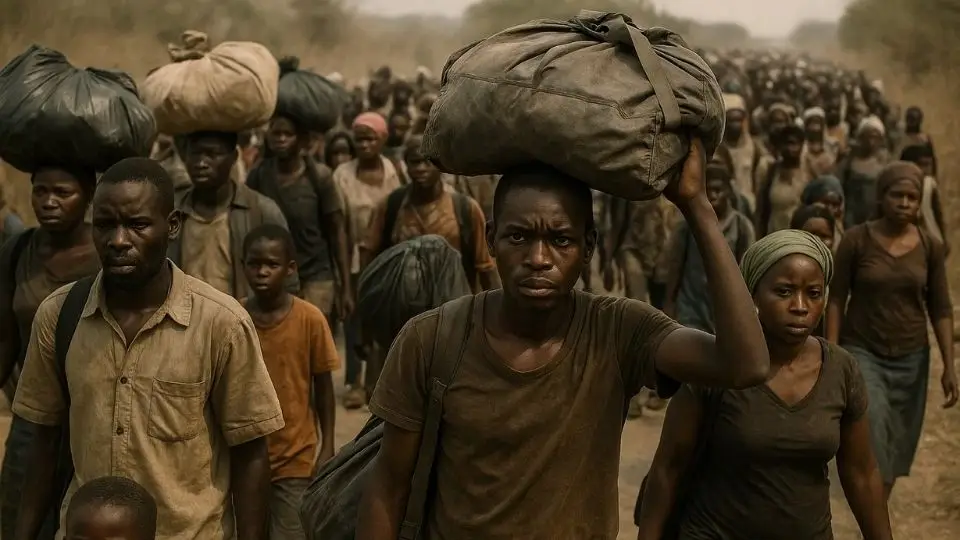
Up to 380 million people could be forced from their homes by 2030 by drought, conflict, and climate disruption, reshaping continents and straining social stability.
Global food demand will surge 50% within the decade even as fertile land declines, while more than 800 million people already face hunger without regenerative production.
From Emergency to Emergence: Transforming the world's smallholder farmers from survival to prosperity through a Whole System Economy that regenerates land, communities, and hope.
Every day, rural families face an impossible choice: stay on depleted land or join the 380 million projected climate migrants by 2030. BioDiversity Arc offers a third path — keeping the grass green on this side of the border by transforming micro-farming into multi-economy abundance. Five economies from one field. One planetary solution from 500 million farmers.
Staple crops, flour, protein products
Hempcrete, panels, insulation boards
Hemp and natural fibre for clothing
Plant-based packaging and materials
Biogas, biomass, biodiesel for power
UN SDG Alignment
Feeding millions, housing communities, restoring the Earth, and creating green jobs aligned with the UN Sustainable Development Goals across our 2024–2035 deployment roadmap.
Target footprint: 8 million hectares · 2025–2035
SDG 2
8 M
people nourished
SDG 8
1.6 M
jobs created
SDG 11
2 M
homes delivered
SDG 13 + 15
125 Mt
CO₂ captured
Whole-System Returns
Each BioFactory unlocks circular revenue streams so regeneration funds itself. Every kilogram of produce flows value back to the hands that nurtured it — off-taking to five economies: food, construction, textiles, bioplastics, and energy — while preserving biodiversity, sequestering carbon, and ensuring basic needs are met for all.
$9.6 B/year
Projected Turnover
$2.9 B/year
Reinvested locally
Alliance
The Biodiversity Arc unites international partners across government, industry, academia, and civil society to advance large-scale ecological and economic regeneration. Through shared expertise, investment, and technology, the Alliance delivers practical, data-driven solutions that connect food systems, housing, energy, and industry into one coherent framework for sustainable development.


.webp)

Global Implementation
Each initiative brings together governments, research institutions, and local communities to implement regenerative solutions in food security, housing, and climate resilience—tailored to regional needs and resources.